A Glimpse of Tomorrow's Roads: Test-Driving AISIN's Newest Technologies
Oct.23, 2026
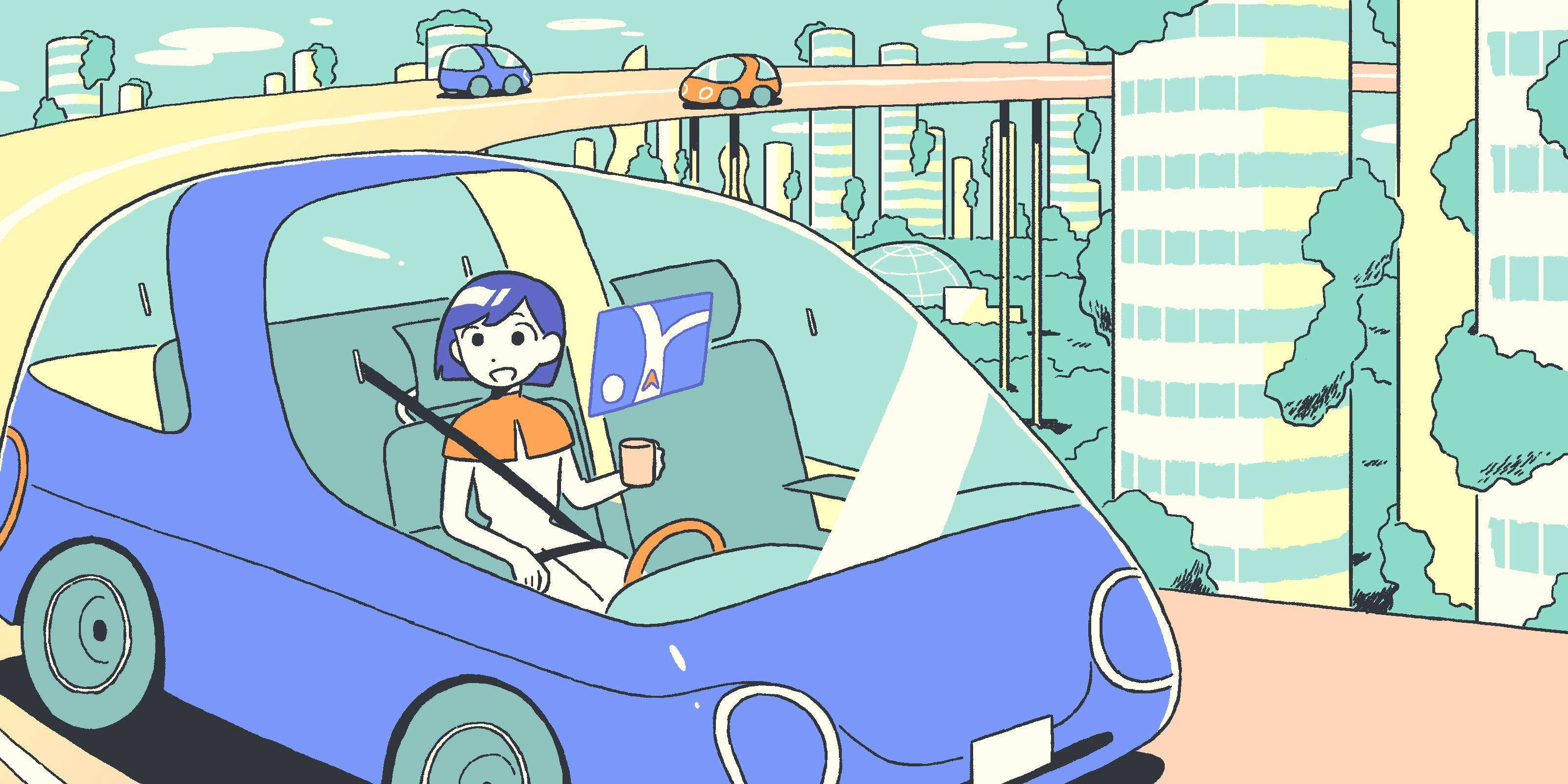
What if your vehicle learned your driving habits? What if doors opened on their own as you approached? When those “what ifs” come true, what will everyday life look like?
Doors, powertrains, bodies, brakes - AISIN's technologies span the fundamentals of Propulsion, Steering, and Braking. Now the company is bringing them together to create entirely new ways to move.
This article takes you inside the “Value of Mobility” test-drive event, where technologies still in development were open for hands-on testing. From doors that open by reading your movements to vehicles that adapt to whoever is behind the wheel, we tried five new technologies firsthand. Automotive writer Izuru Endo shares the surprises, the thrills, and the vision of the vehicle's future that lies beyond them.
Hands-On with AISIN's Next-Generation Technologies at the Toyokoro Proving Ground
The automotive world is changing at breathtaking speed. Under its FYE2029 Mid-Term Business Plan, announced in February 2026, AISIN is developing technologies that will shape how we move in the years ahead. To offer a tangible sense of the “future mobility” these innovations promise, the company recently held a test-drive event at its Toyokoro Proving Ground in Hokkaido, Japan.
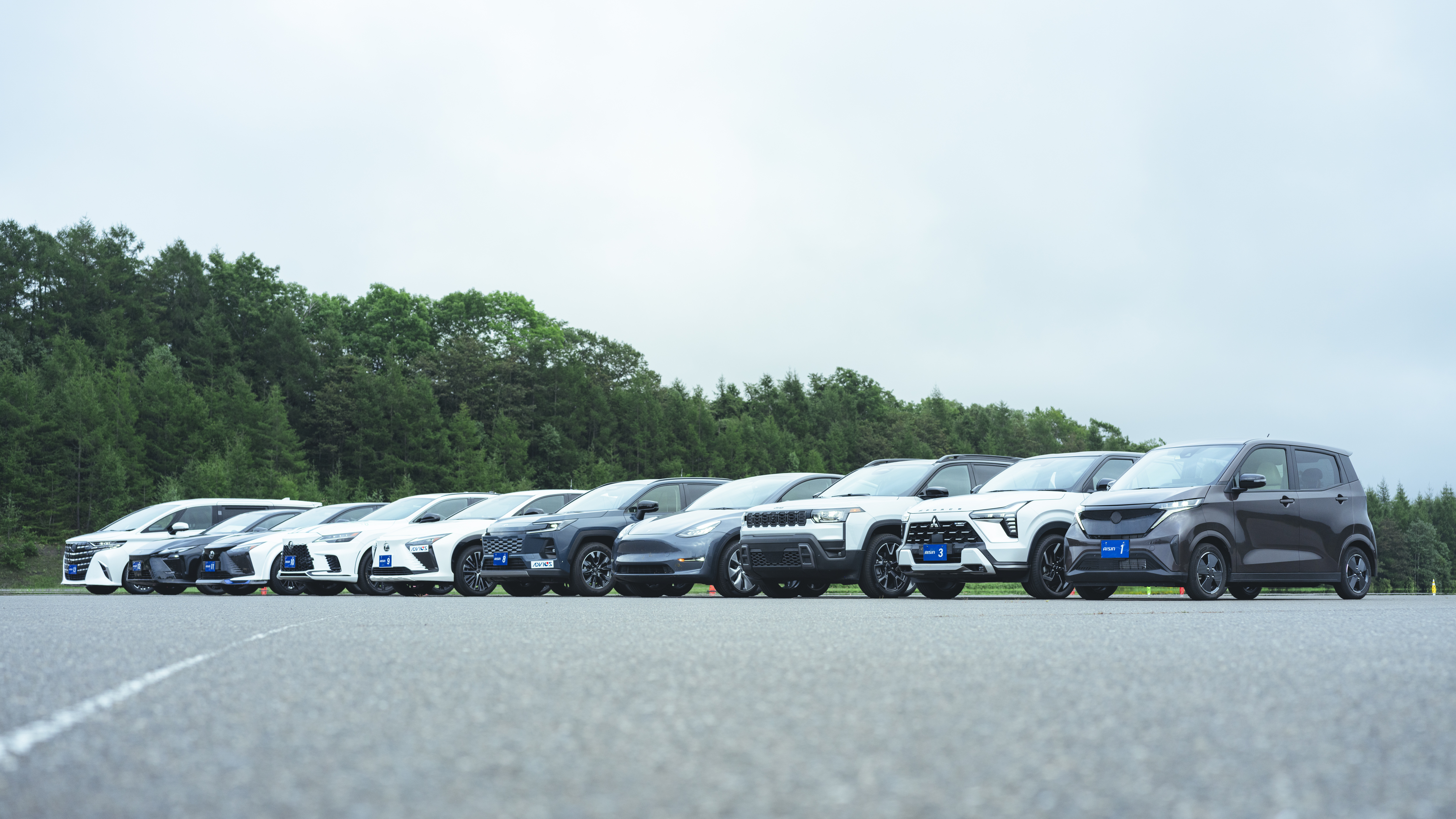
Test vehicles equipped with technologies still in development were lined up and ready. Behind the wheel, one thing became clear: by connecting its long-honed expertise in Propulsion, Steering, and Braking, AISIN is bringing the future much closer than imagined.
The Future of Getting In: a Vehicle that Understands your Intensions
First up was Stress-Free Entry, which automatically opens the door automatically as you approach. Picture yourself with your hands full of shopping bags or a child in your arms. Suddenly, the door in front of you glides open effortlessly. Wouldn't that be wonderful?
Using cameras and sensors, the system detects a person's position, orientation, direction, and speed of movement, then determines whether they intend to enter the vehicle and which door they're approaching. No gestures or commands are needed. Just the correct door opens and closes, all on its own.
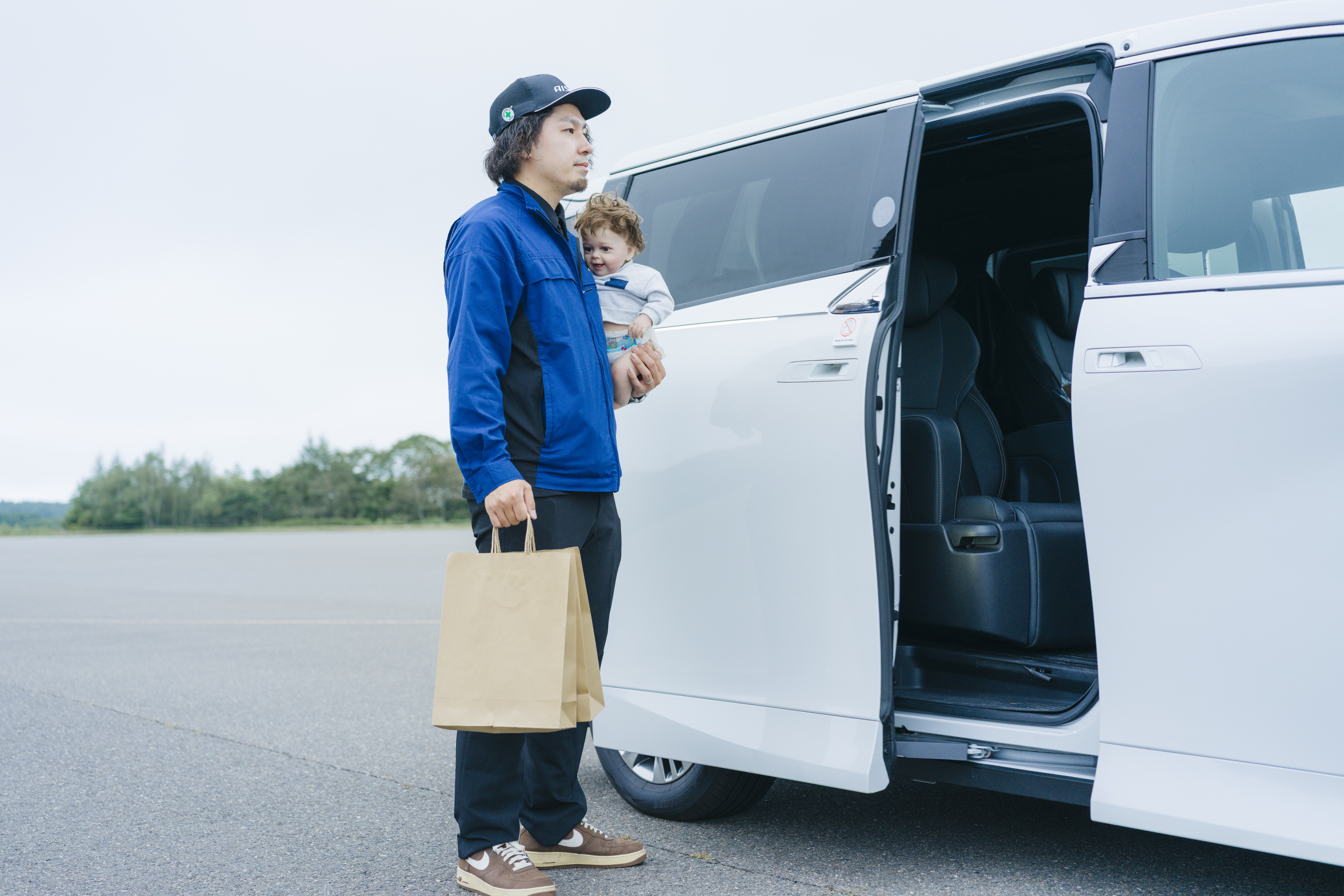
Photo: The system senses your intention to get in and opens the door only when needed.
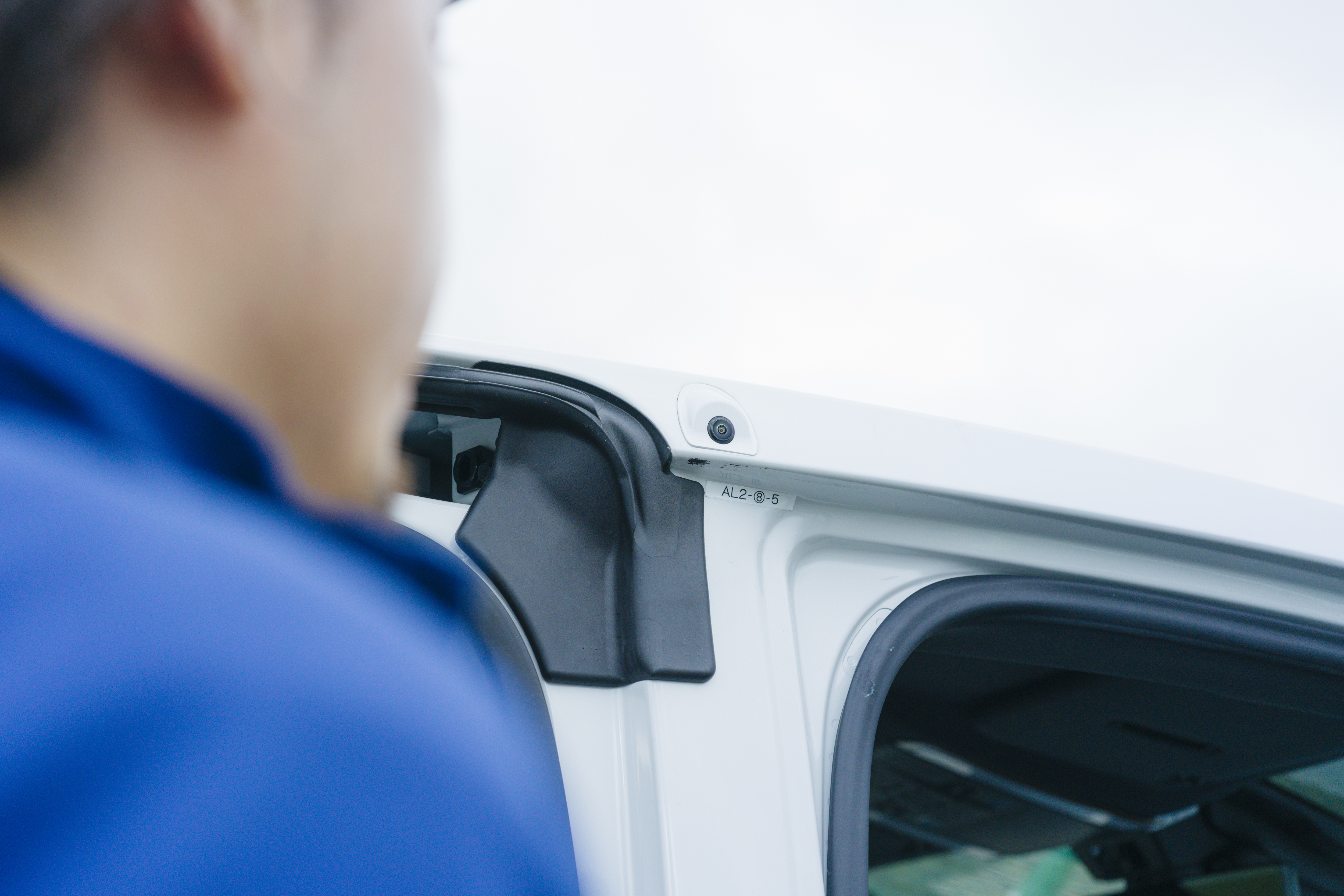
Photo: Cameras and sensors track the movements of the vehicle’s occupants.
When I tried it, only the door in front of me opened, at the exact moment I wanted to enter. It works with the sliding door and front door as well.
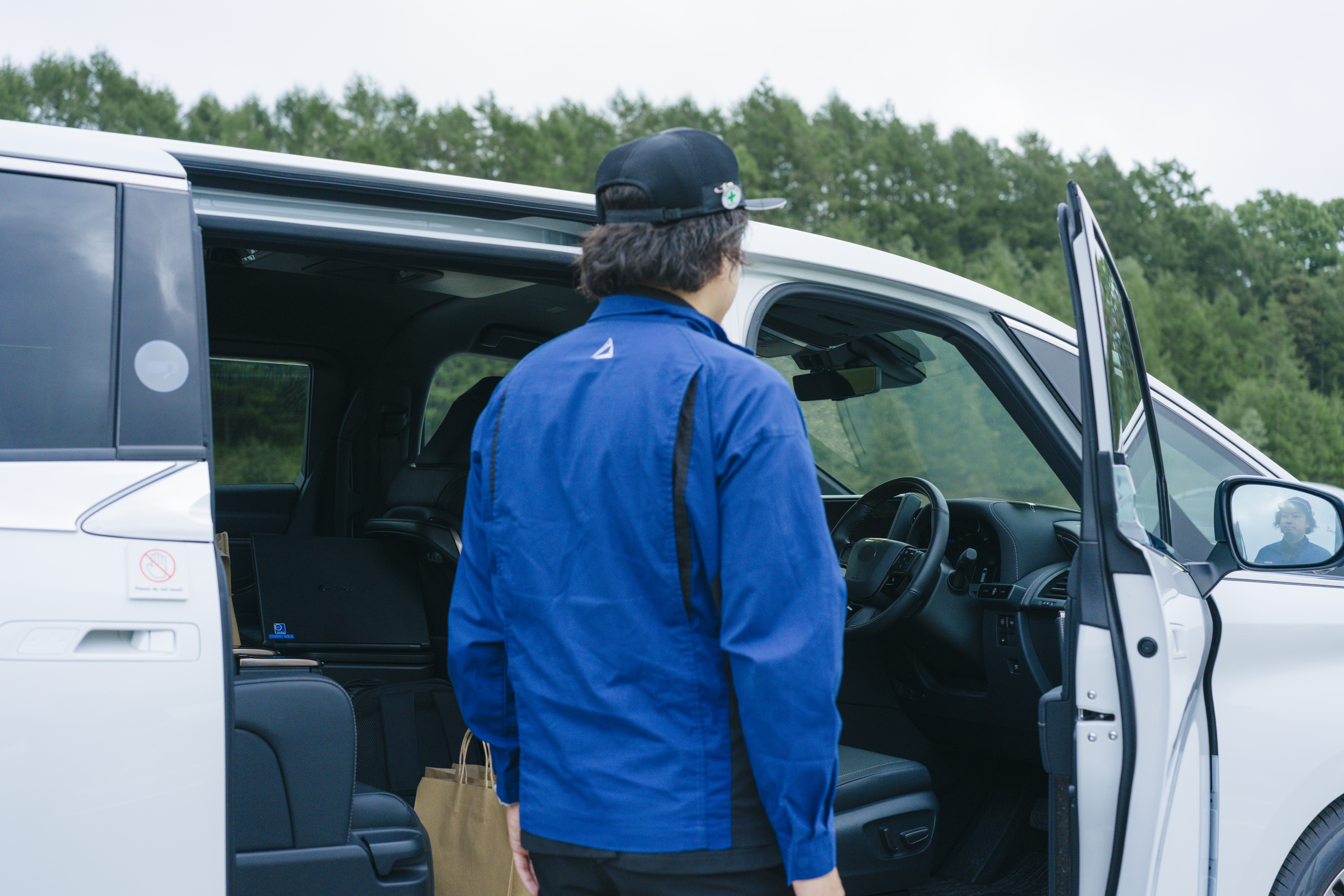
Photo: The front door also responds
Before trying it, I was skeptical. Wouldn't it confuse the sliding door with the front door? But the vehicle anticipates your next move based on your posture and movement, identifying exactly which door you're heading for. It opens the correct one, almost as if it can read your mind. The system van even distinguish between someone simply walking past and someone intending to get in the vehicle, preventing doors from entering unnecessarily. And, as an added benefit, it can also detect suspicious activity near the vehicle, providing an early warning of potential break-ins or other trouble.
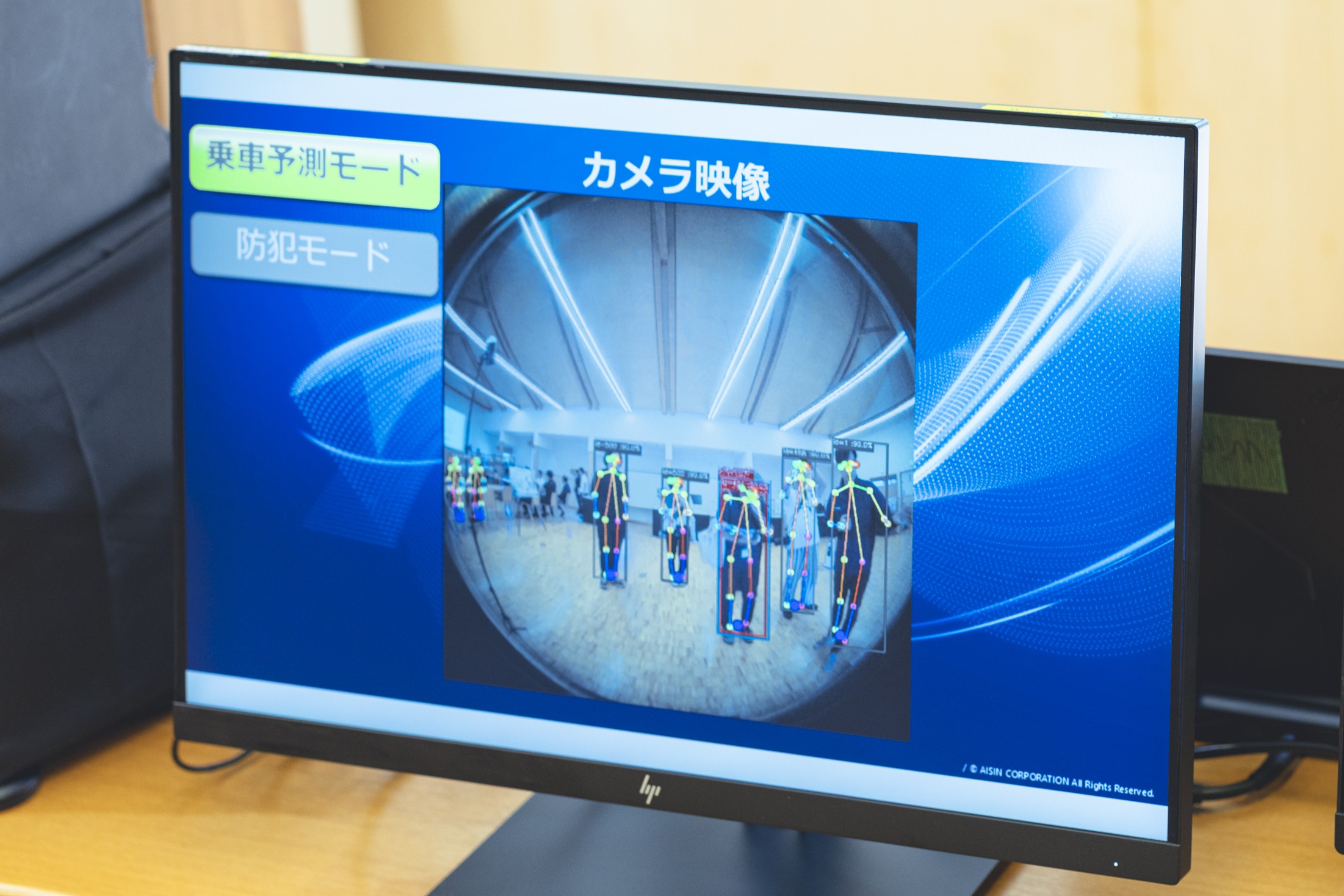
Photo: Detecting posture and movement.
As this technology evolves, the vehicle will transform from something that simply follows our instructions into a partner that understands our needs and intentions and responds naturally. Combine this with other AISIN technologies such as low-speed automated driving and automated parking, and the possibilities become even more exciting. Imagine a vehicle waiting at your front door the moment you’re ready to leave, or one that learns your routines and suggests where you might want to go. The possibilities are endless.
The Future of Propulsion: Making Every Journey More Comfortable
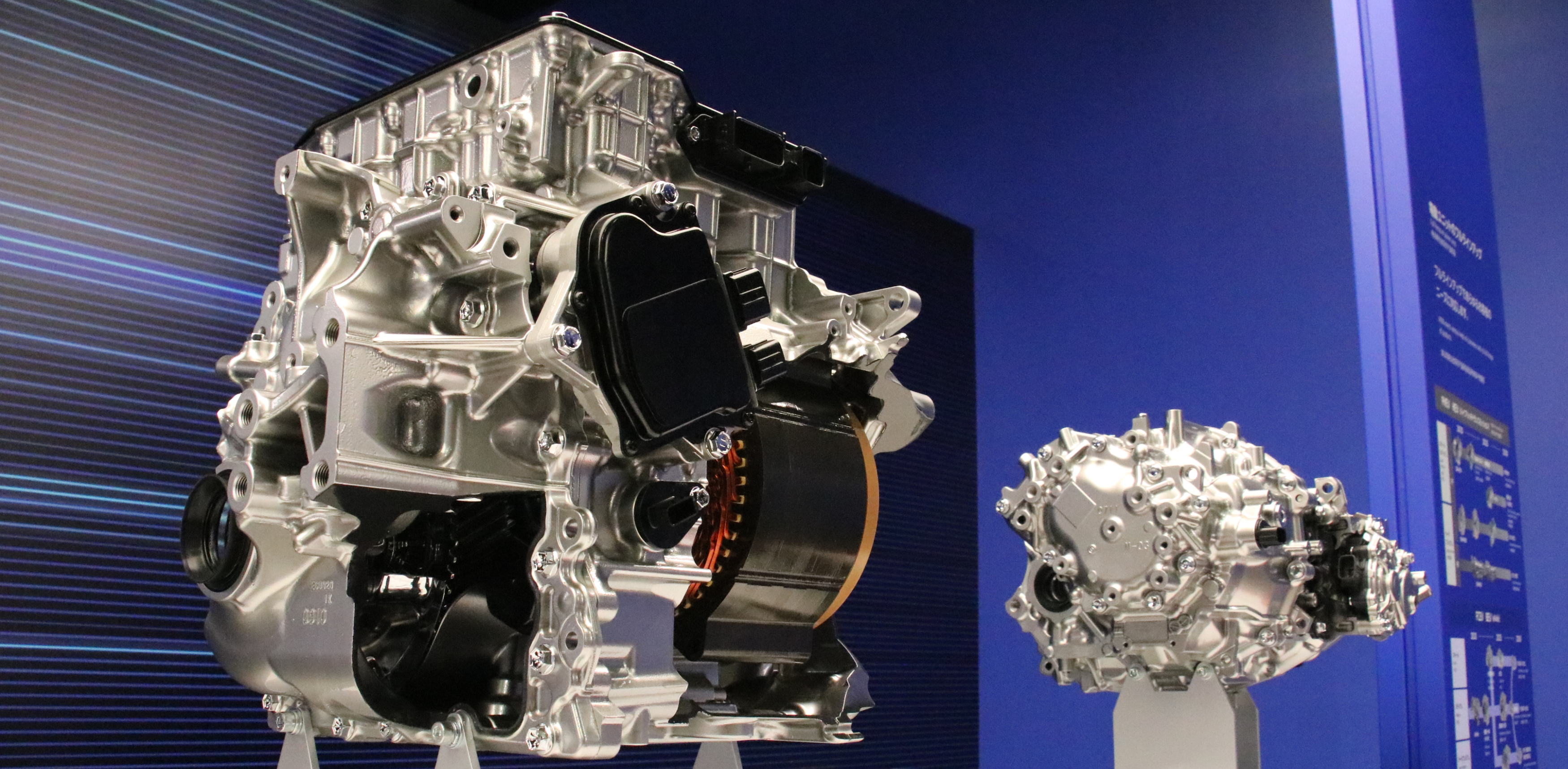
Next, I experienced the Functional Integrated Electric Unit (Xin1). Developed for the coming battery electric vehicle (BEV) era, it combines the many functions needed to drive a vehicle into a single, remarkably compact unit.
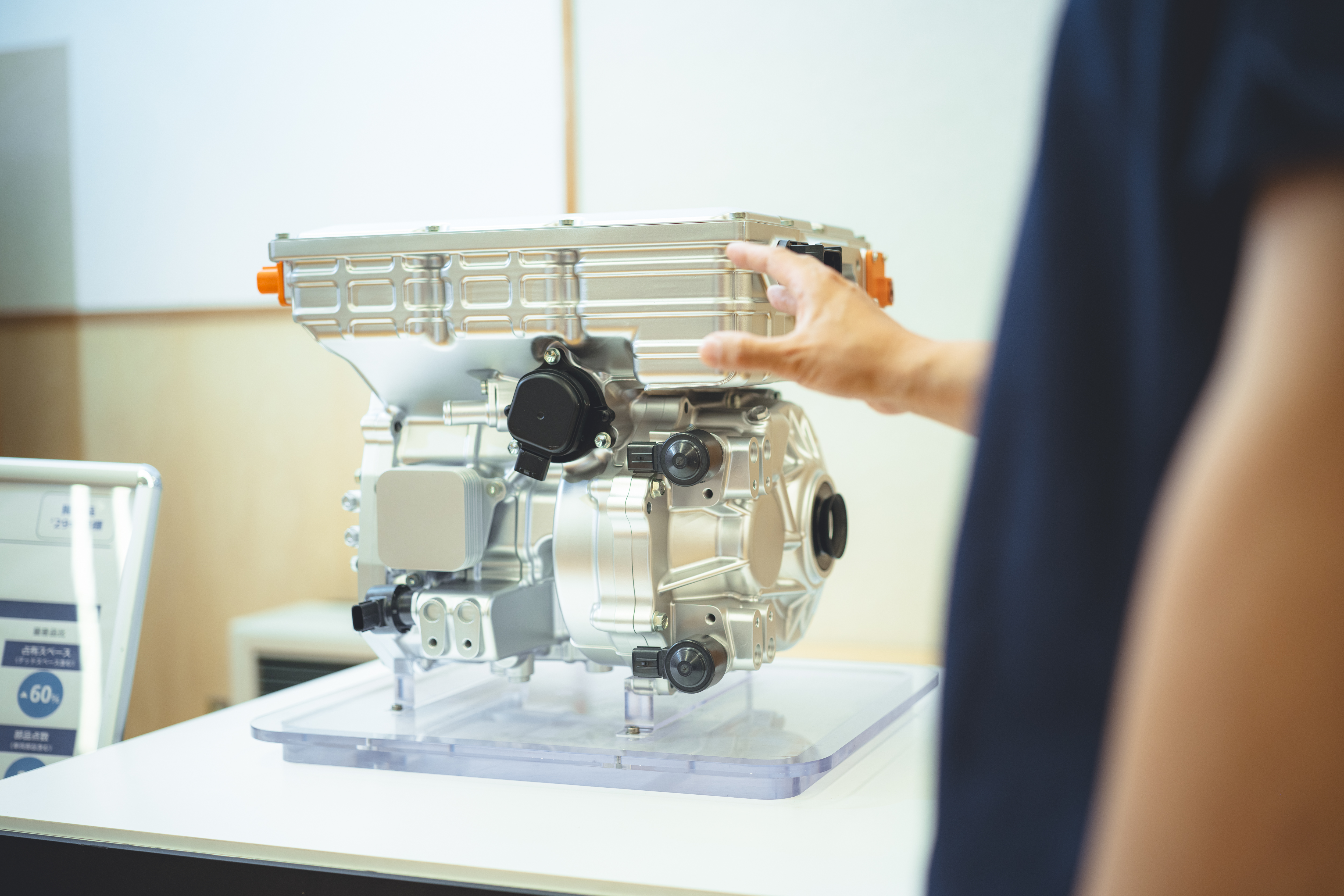
Photo: The compact, lightweight Functional Integrated Electric Unit (Xin1)
A peek under the hood before setting off revealed just how small Xin1 is. According to AISIN, it takes up about 60% less space than conventional units.
We drove a production kei-class BEV back-to-back with a Xin1-equipped vehicle. On the road, the Xin1 vehicle stayed composed even through tight curves, giving me noticeably more confidence behind the wheel.
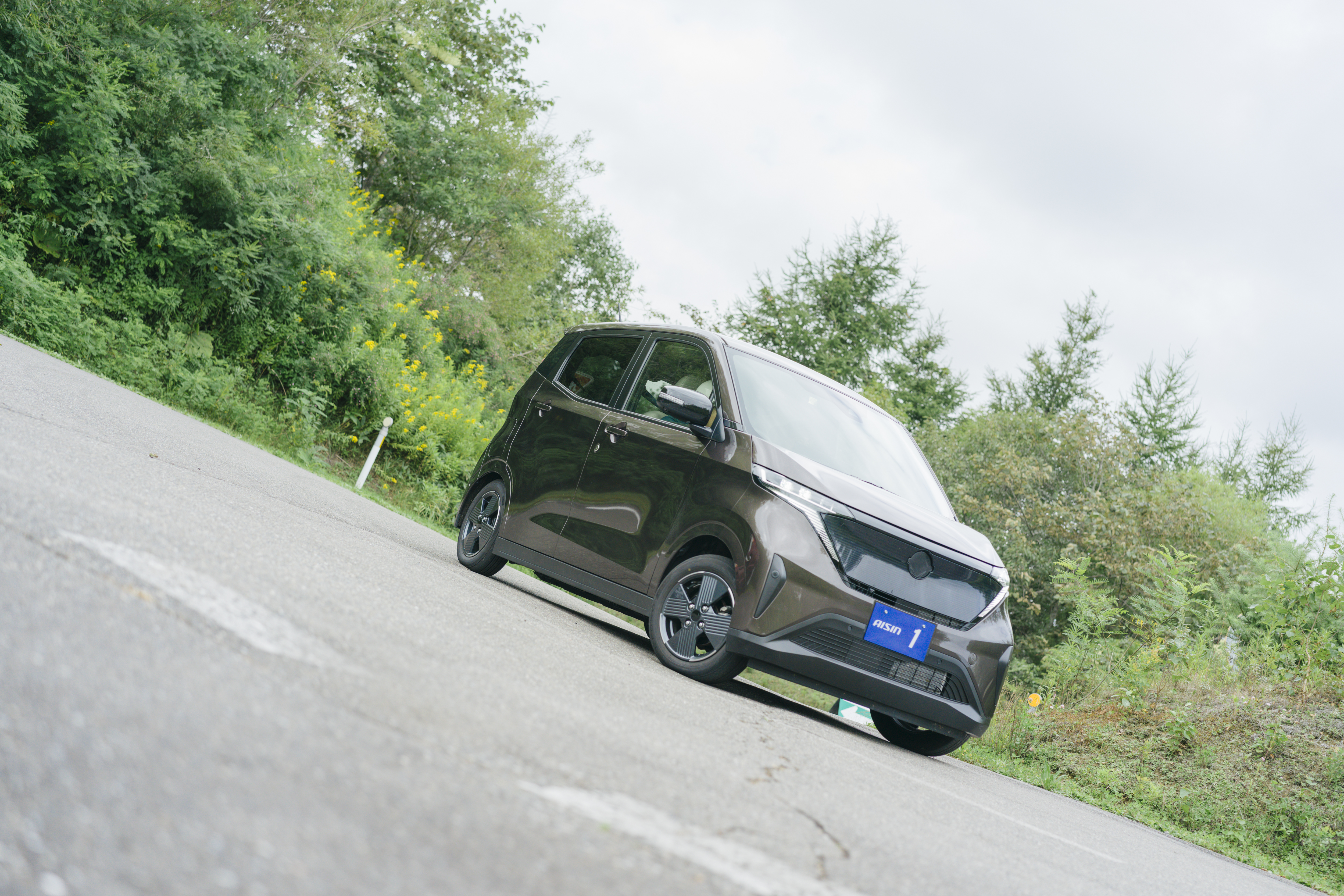
One reason for this stability is a lower center of gravity, made possible by the unit's smaller size and lighter weight. The result is a vehicle that is less prone to sway in corners and delivers a steadier ride.
The smaller unit also gives designers greater freedom in vehicle design and interior layout. Imagine a future when vehicles evolve from simply getting us from place to place into comfortable living rooms on wheels.
Picture this: your vehicle drives itself, hands-free, while the entire family relaxes, watching a movie, playing games, or sharing a meal. That future may be closer than you think.
The Future of Steering: Handling that Goes Exactly Where you Want
Next came the TEKIZAI Body. Vehicle bodies are generally made of steel, but in recent years “gigacasting” -- forming large aluminum sections in a single piece -- has drawn attention for reducing weight and boosting production efficiency. Yet it has drawbacks, including making the body harder to repair and its parts harder to replace.
The TEKIZAI Body is a new body structure that combines the best of conventional steel bodies and gigacasting. It's an approach only AISIN could take, drawing on broad expertise that spans everything from the properties of steel and aluminum to full vehicle body development.
We drove three vehicles back-to-back: a steel body, a gigacast body, and the TEKIZAI Body. The steel body tended to run wide in corners, while the gigacast body felt sharp and twitchy. The TEKIZAI Body struck the perfect balance in both handling and ride comfort—it felt just right.
The secret lies in balancing rigidity and flexibility. When a vehicle's frame is stiff to just the right degree, the body resists twisting through corners, and handling improves.
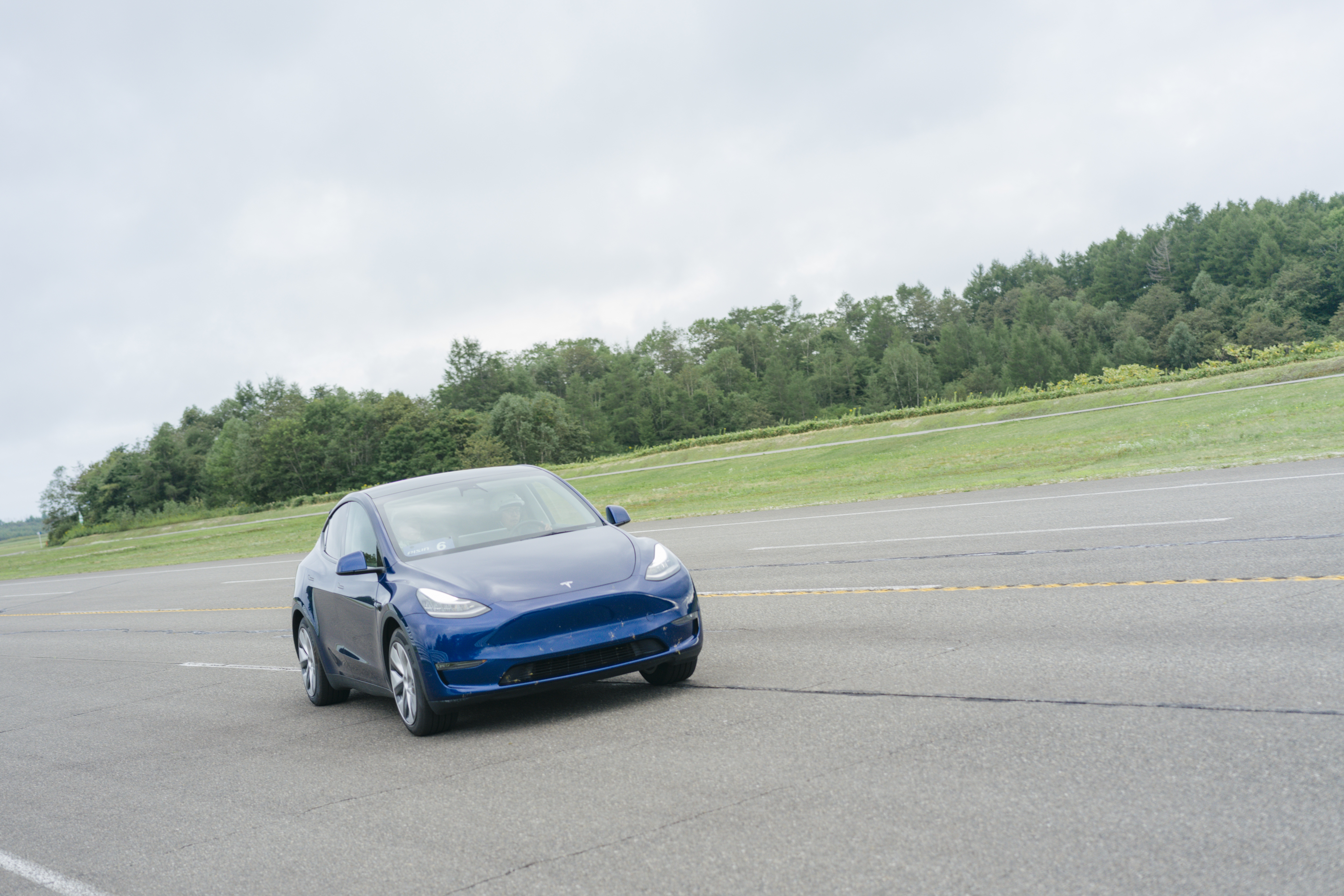
Photo: The TEKIZAI Body test vehicle also reduces strain during lane changes.
Maintenance becomes easier, too. If parts of the body can be updated so the vehicle stays in service longer, the result could be vehicles that are kinder to the environment and tailored to each individual's needs.
The Future of Braking: Toward Zero Traffic Accidents
The fourth stop was all about braking. BEVs, with their heavy batteries, tend to weigh more, which demands even greater stopping power. Among the test vehicles was one equipped with a next-generation braking system, the Electro-Mechanical Brake (EMB).
Whereas conventional vehicles use hydraulic pressure to apply the brakes, the EMB is controlled by electrical signals. The result is faster, more precise braking.
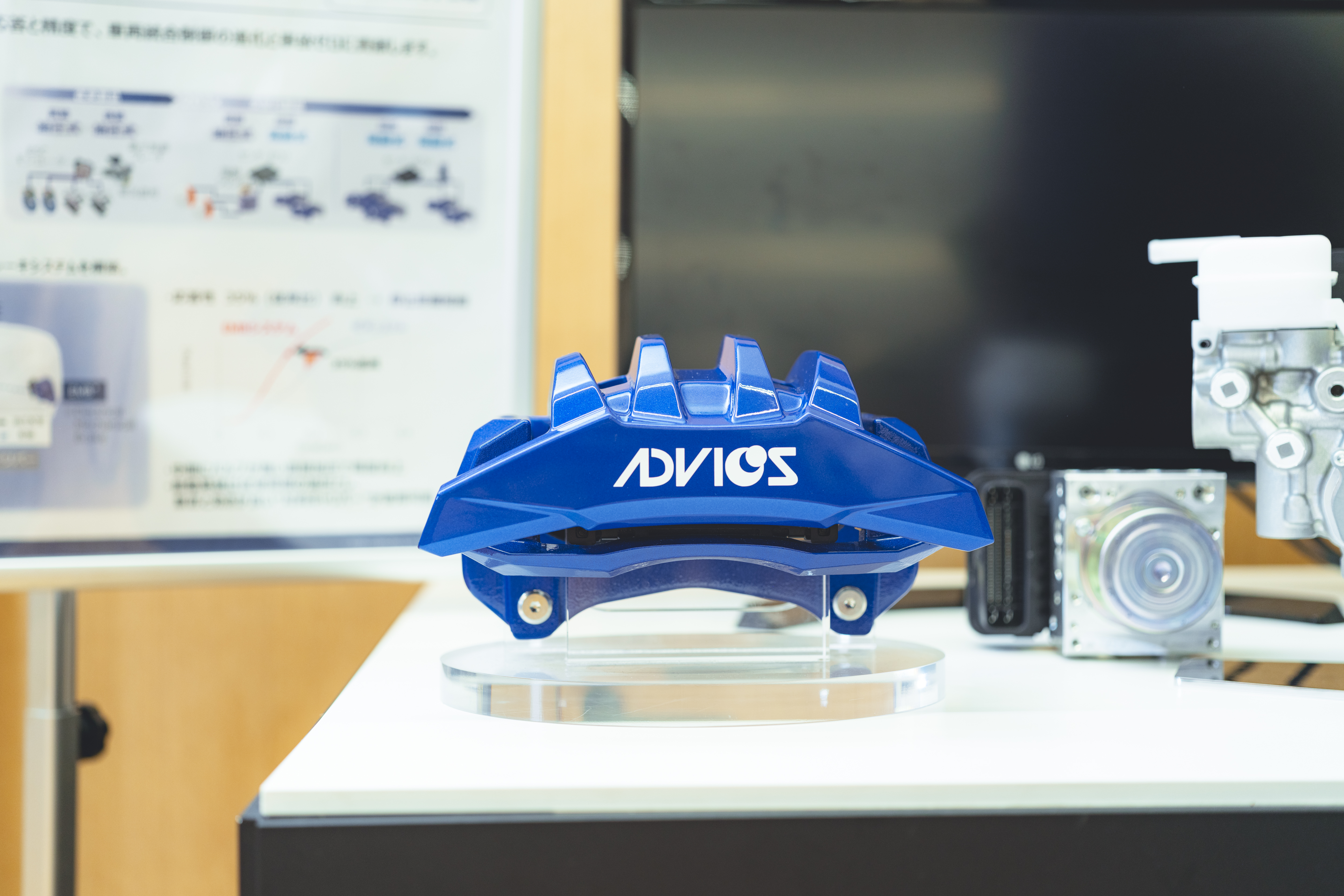
Photo: The next-generation braking system
After accelerating to a set speed, I hit the brakes and the vehicle stopped in an instant. I had never felt braking like this before. The system's responsiveness truly impressed me.
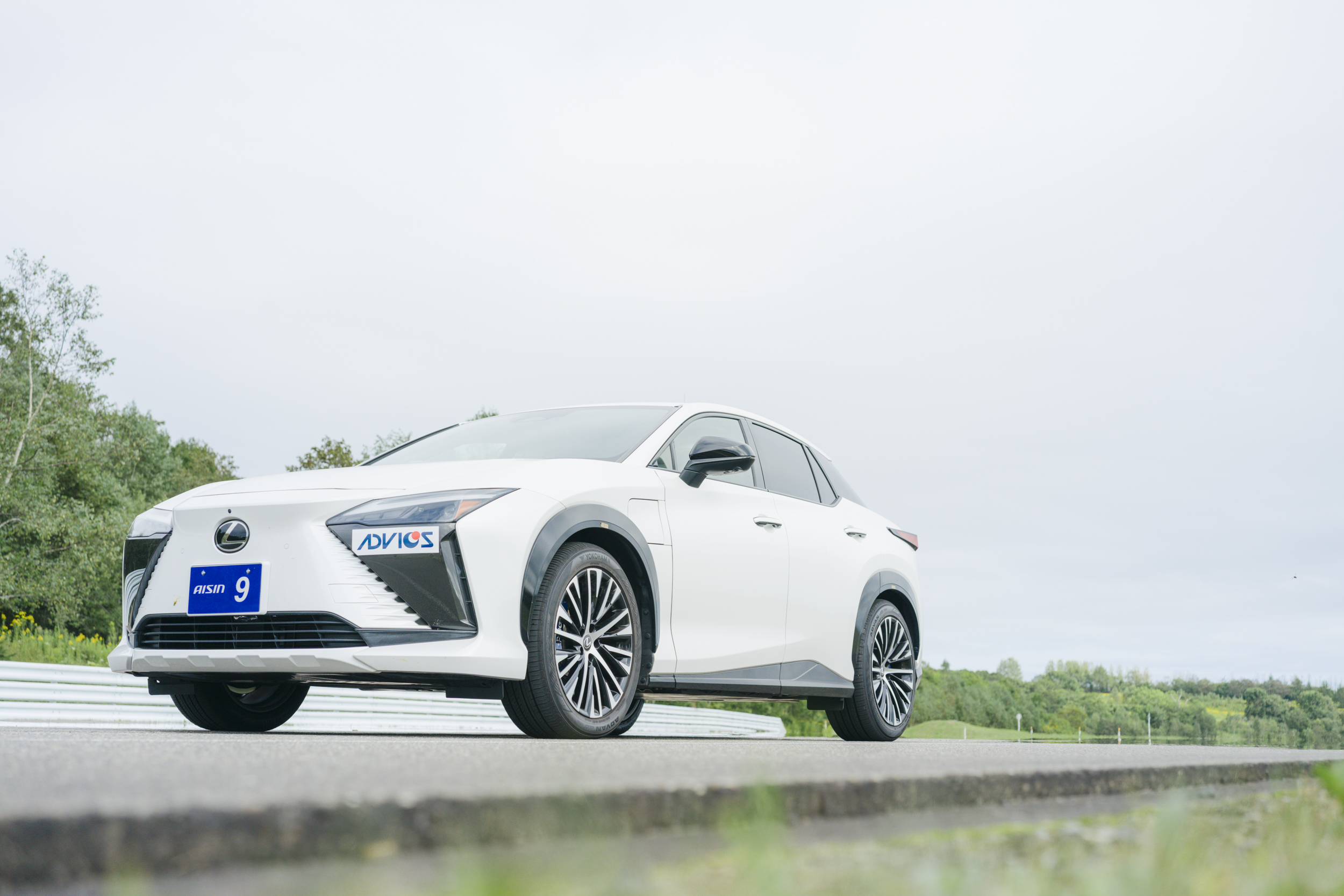
Photo: Stops right on the spot
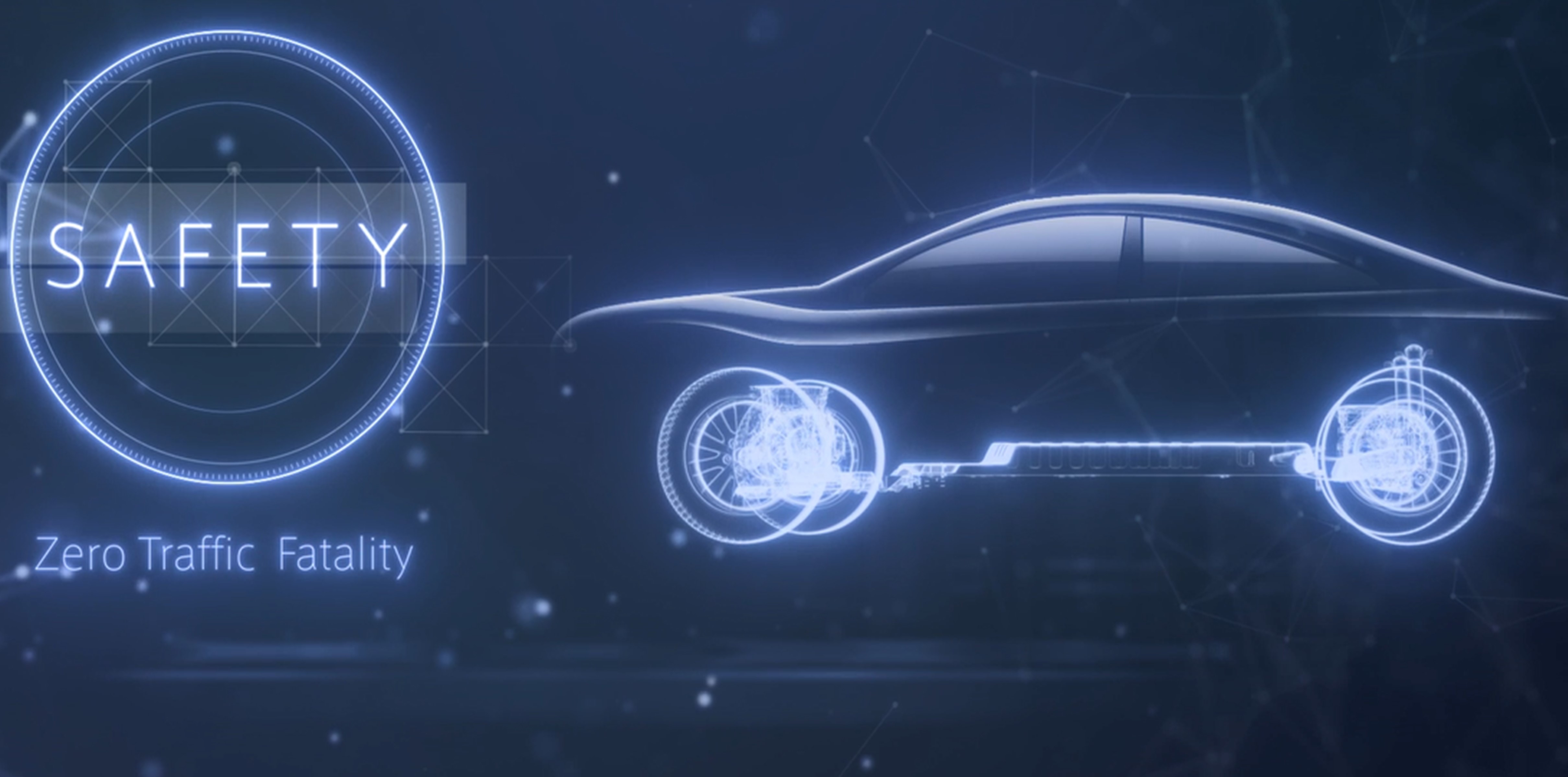
Stopping faster and more reliably can help prevent rear-end and other collisions in an emergency. This is a technology that will be essential to achieving a world with zero traffic accidents in the near future. It fuels real hope for a future in which everyone on board, including the family and friends we hold dear, can travel safely.
The Future of Driving: A Vehicle that Adapts to Each of Us
For the fifth stop, let's turn our attention to the experience of driving itself.
AISIN develops a wide range of products and technologies that support a vehicle's fundamental performance in Propulsion, Steering, and Braking. Building on this strength, the company is developing Vehicle Motion Integrated Control, which links the powertrain, brakes, suspension, steering, and other systems to orchestrate the entire vehicle in the best possible way.
The goal goes further: by combining driver information, vehicle status, map information, cloud data, and more, the vehicle will understand its situation, anticipate what's ahead, and deliver the ideal drive for each individual.
At the event, we drove two test vehicles that showcase concrete applications of Vehicle Motion Integrated Control: Personalize, in which the vehicle adapts to the driver, and Conversion, which lets you change the vehicle's very character.
First, Personalize. The vehicle doesn't just adjust its driving characteristics to suit the driver, it also suggests the characteristics that suit them best.
After just a short lap of the test course, the vehicle had analyzed my driving style and tuned its performance to match. Running the same course again, I could feel myself taking the corners more smoothly than before.
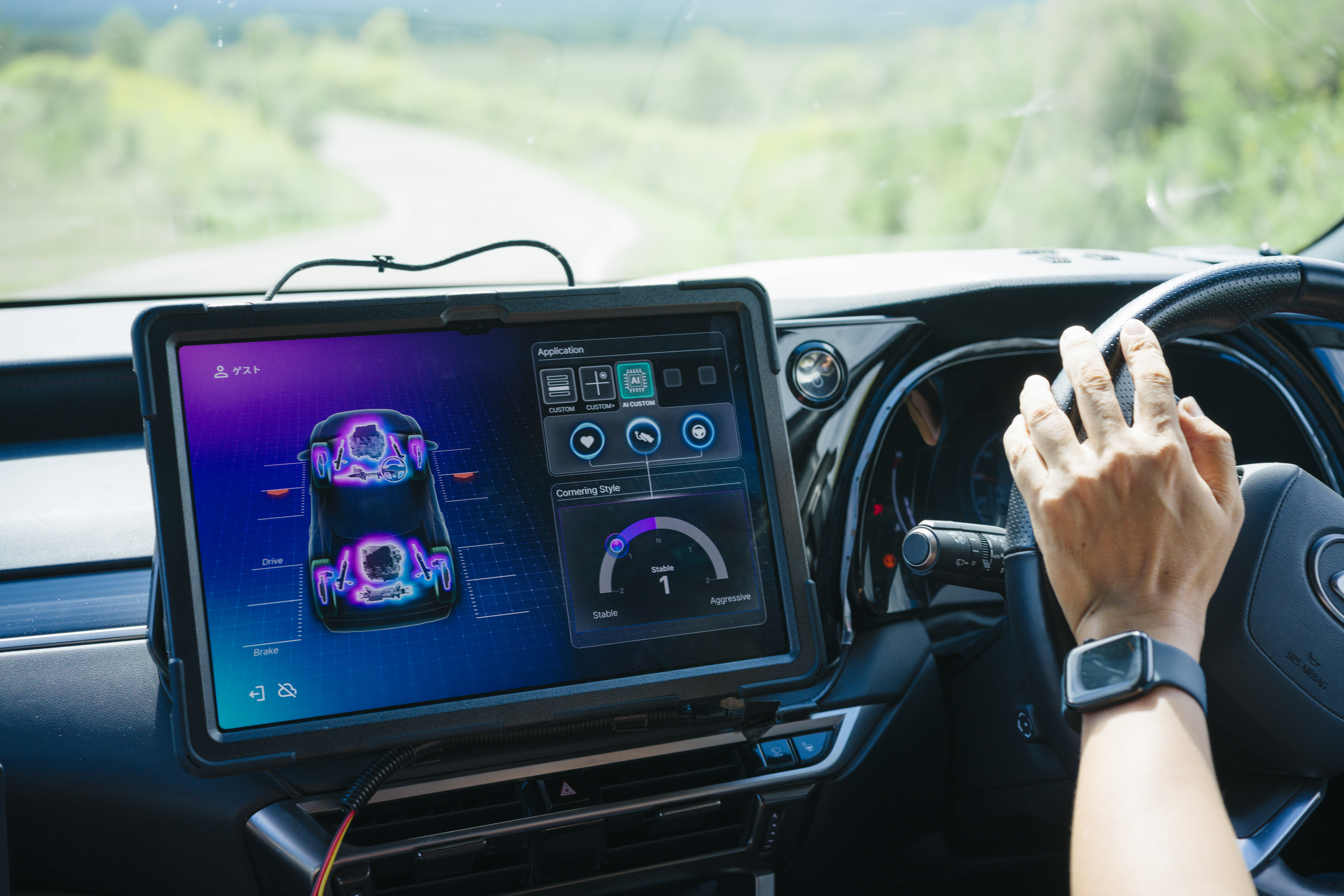
Photo: The vehicle analyzes the driver's habits and fine-tunes its response
With this kind of support, people who rarely drive, or who feel uneasy on mountain roads, could drive with confidence, and maybe even start looking forward to venturing out.
In the future, the technology might support drivers according to their age or health, or make a rental vehicle on vacation feel just like the one you drive at home. When everyone can get around with peace of mind, it could also help solve mobility challenges in local communities and travel destinations alike.
The Future of Enjoyment: a Vehicle Whose Personality Changes with Your Mood
The other application of Vehicle Motion Integrated Control, Conversion, let me savor the pure, fundamental joy of driving.
Plenty of vehicles today let you switch to a sport mode, but in the end that's just a different mode of the same vehicle. With Conversion, however, the vehicle can actually transform into a completely different one.
The test vehicle was programmed with the characteristics of four vehicles, including a celebrated 1960s Japanese sports vehicle with a 2-liter inline-six, a V10-powered supercar, and a V8 American muscle vehicle.
Behind the wheel, I was amazed at how thoroughly each vehicle was recreated—not only the acceleration, but the handling and even the engine note filling the cabin. What fascinated me most was that, although the interior, exterior, and operation were nothing like those of the vehicles it was imitating, I still felt fully immersed and thrilled, as if I were truly driving each one.
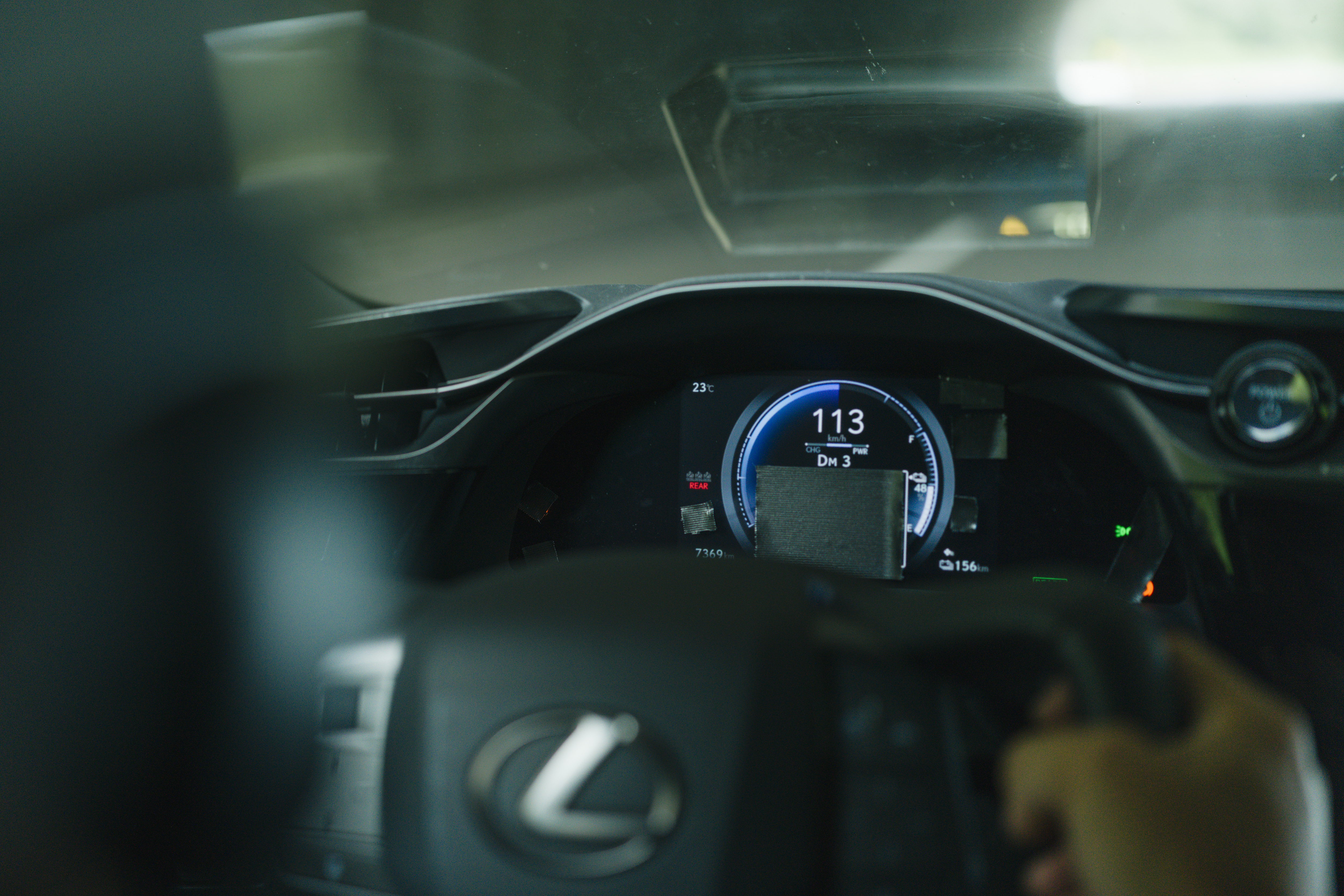
Photo: Conversion transforms the vehicle's personality
As a vehicle lover, I was delighted to see that AISIN is not only pursuing automation but also wholeheartedly embracing what has always made vehicles special: the sheer joy of driving. BEVs, it turns out, can be just as fun to drive as vehicles with engines. With technology like this, BEVs are sure to win over vehicle enthusiasts as they become mainstream.
Transforming a vehicle into exactly what you want—something only Vehicle Motion Integrated Control and BEVs make possible—showed me that a single vehicle can offer many kinds of enjoyment.
In a future where Conversion is standard equipment, you might let automated driving handle the daily commute with ease, then on the weekend say, “Today, I'll drive with the feel of that supercar.”
Looking Ahead to the Mobility Experiences of Tomorrow
Every technology I experienced at this event promises to make everyday life more convenient, comfortable and secure for drivers and passengers alike. Some were futuristic and genuinely exciting that I found myself thinking, “I hope these innovations become part of our everyday lives.”
But these are not pipe dreams. They are real technologies under active development for practical use. The future of mobility may be closer than we think. As these technologies advance and connect with one another, it's easy to imagine a future like this:
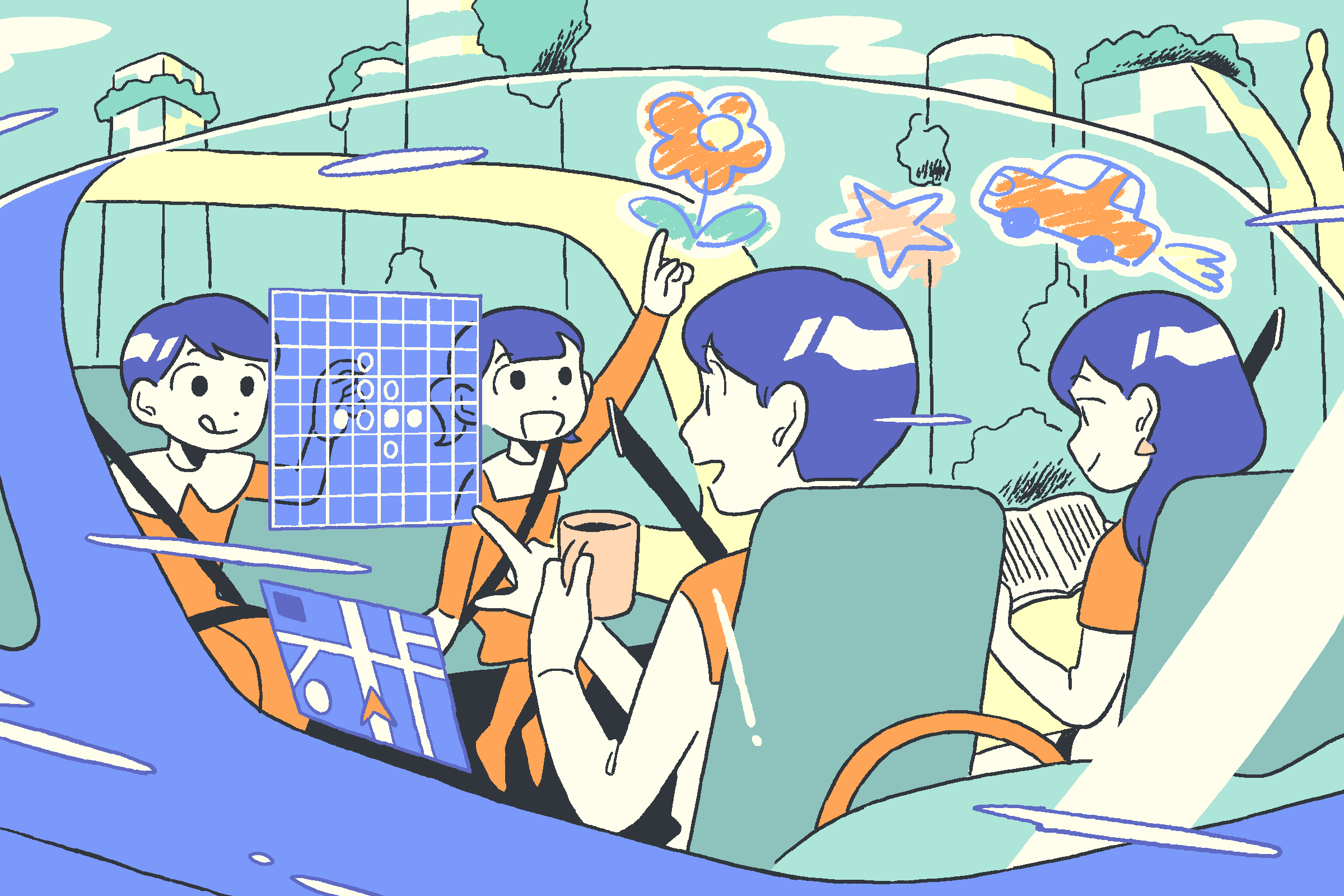
You step out your front door to find your vehicle waiting, and it opens its door for you. Once you're inside, the display shows your destination, pulled from your calendar app, along with your health data. You wait for the kids to climb in, confirm the suggested destination, and switch to automated driving mode. The driver's seat swivels around to face the children, and together you watch videos of the places you'll visit on today's day trip. It's been a long time since anyone heard news of a traffic accident. On the way home, the kids drift off to sleep in the quiet cabin. Wanting to savor the drive, you switch off automated driving and turn on Conversion. What kind of drive shall we enjoy today?
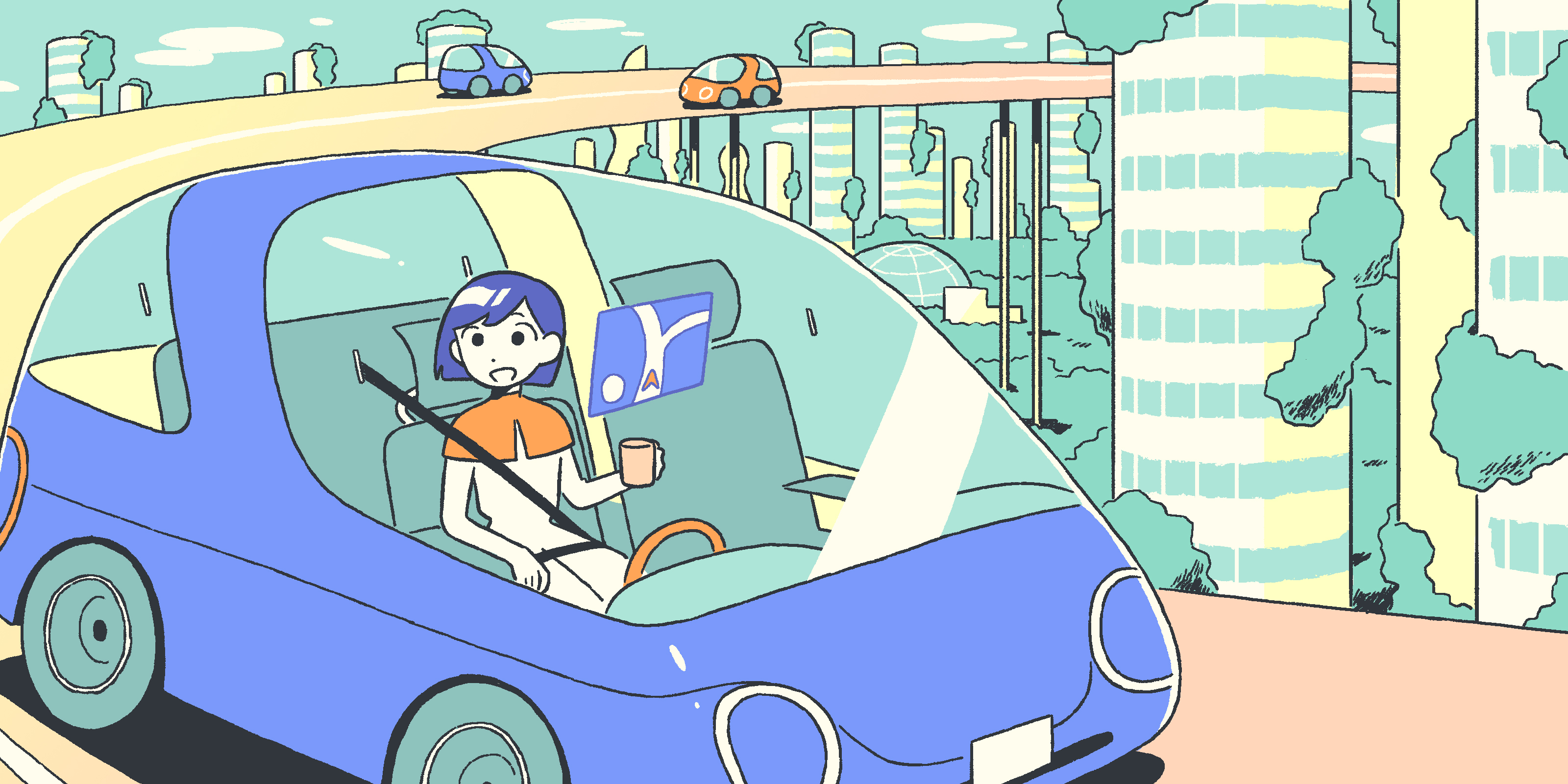
The technologies I experienced touch every part of the journey—from entering the vehicle, to accelerating, steering, braking and simply enjoying the ride. Doors, electric drive units, vehicle bodies, brakes—when each of these technologies work together mobility becomes more convenient, more reassuring, and more fun. This event left me convinced that AISIN’s vision for the future of mobility is steadily becoming a reality. And I can't wait to see what’s next.
Writer profile:
Izuru Endo
Illustrator and writer specializing in vehicles and railways, drawing with Copic markers. Certified hot-spring sommelier. Has illustrated the covers of the print edition of Vehicle Sensor magazine since 2017. Focuses on illustrations and articles on lesser-known, practical, and commercial vehicles, and serves as supervising editor of the Nostalgic Commercial Vehicle Collection series. Owns a Nissan-built VW Santana Xi5 Autobahn DOHC and a B11 Nissan Sunny California.
Share this article